If It Keeps Stressing You Out, Stop Doing It the Same Way
This morning, I’m navigating a wave of my own.
Quite literally, actually.
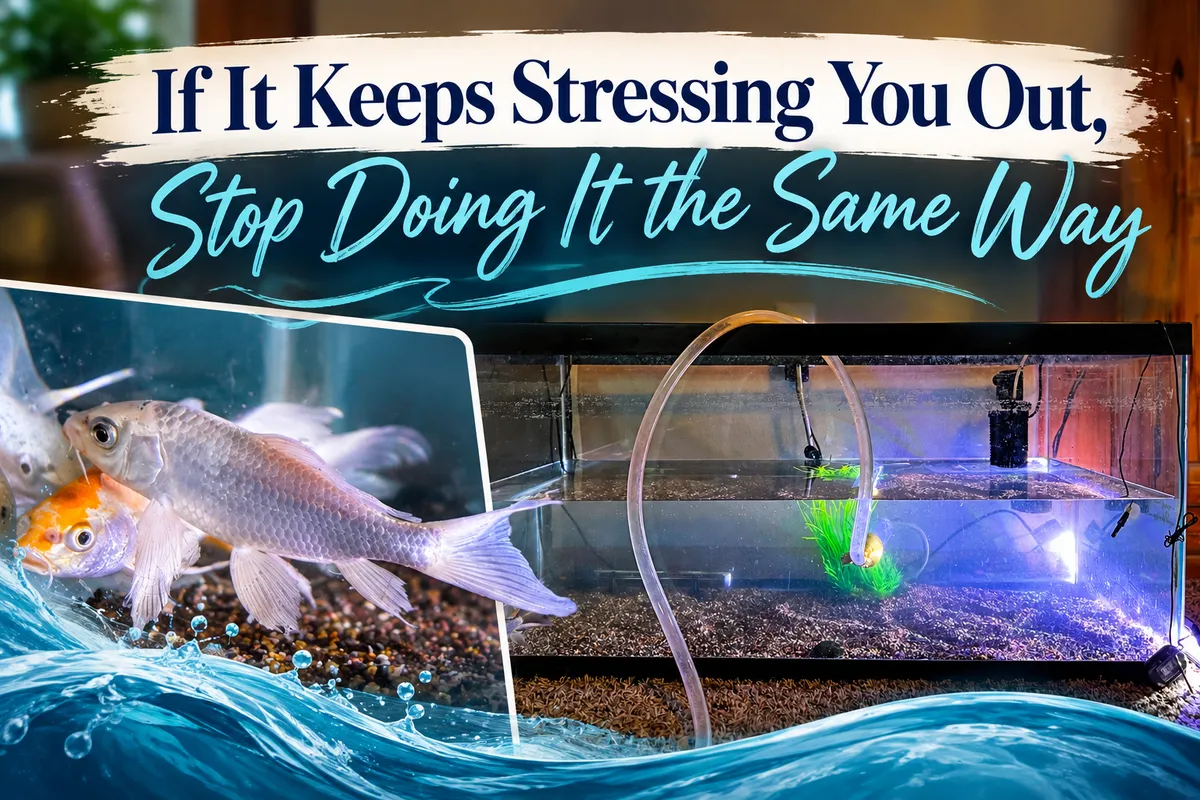
I’m cleaning my fish tanks, creating all kinds of waves for my fish in the process.
With everything surrounding the launch of Life Doesn’t Balance, some of my normal household routines have gotten pushed back a little. I normally clean my tanks every week to ten days, but this time it has probably been closer to two weeks.
I’ve kept the filters clean and made sure the fish were cared for, but the algae was definitely announcing that it was time for a thorough cleaning and fresh water.
And as I worked this morning, I started thinking about stress.
One of the Heart Blocks I teach about is Stress & Anxiety, and one of the things that can create stress is feeling as though something is happening that is completely outside of our control.
For my fish, tank-cleaning day is exactly that.
They didn’t decide the tank needed cleaned. They don’t understand why their familiar environment is suddenly changing around them. They simply know that the water is moving, things are being disturbed, and something they cannot control is happening.
My two fish in the 20-gallon tank—a goldfish and a traditional koi—especially struggle with cleaning day. Afterward, they often stay in the corner for quite a while. Their breathing appears heavier, and sometimes they won’t eat immediately.
I’ve noticed this pattern repeatedly.
And today I found myself asking a question that applies to far more than fish:
If something repeatedly causes stress, what could we do differently?
Normally, when I clean their tank, I remove quite a bit of the water. Sometimes I take it down far enough that I can see their top fins above the water.
From my perspective, there’s a reason for that. I want to remove as much of the old water, algae and debris as possible before replacing it with fresh water.
But today I tried something different.
I left more water in the tank.
Enough that they could continue swimming freely while I worked.
I don’t necessarily love that solution. Leaving more old water means I may have to clean the tank again sooner. It isn't quite as satisfying as removing as much of the old water as possible.
But perhaps there is a tradeoff worth making.
If leaving more familiar water allows my fish to feel safer and experience less stress during the process, maybe a little inconvenience on my part is worthwhile.
And that made me think about our own lives.
Sometimes we recognize something as stressful and simply accept the stress as part of the process.
“This is always stressful.”
“This always makes me anxious.”
“I hate when this happens.”
“This is just how I react.”
But what if repetition isn't simply something to endure?
What if repetition gives us information?
When something repeatedly creates the same stressful response, we have an opportunity to become curious instead of simply pushing through it.
What exactly is creating the stress?
What part of this feels out of control?
What could I change about the process?
What would help me feel safer while I move through it?
We may not be able to eliminate the situation itself.
My fish tanks still have to be cleaned.
The algae still has to come off.
Fresh water still needs to go in.
The disruption cannot be eliminated entirely.
But perhaps the way I create that disruption can change.
That distinction matters in our lives, too.
There will always be waves we cannot prevent. Relationships change. Work becomes demanding. Families need us. Plans shift. Bodies change. Unexpected circumstances happen.
Life doesn't balance.
Life moves.
The goal isn't necessarily to create a life in which nothing stressful ever happens. Sometimes the healthier response is learning to notice how we are experiencing those inevitable waves and asking whether there is another way to navigate them.
Sometimes the adjustment will be significant.
And sometimes it may be as simple as leaving a little more water in the tank.
My 40-gallon tank is next. That one holds four beautiful butterfly koi, each with a completely different appearance and personality. Two are platinum white koi I received for my birthday. One is an orange-and-white Mother's Day koi from two years ago, and the newest is a striking black-and-silver koi from this Mother's Day.
They are playful. They watch me. They certainly know how to convince me they need to be fed.
And today, I'm going to pay a little closer attention to how they respond while I clean their home.
Because noticing matters.
Whether we're caring for ourselves, another person, or even a tank full of fish, noticing a repeated stress response gives us information.
We don't always control the wave.
But sometimes we can change the way we move through it.
And sometimes one small adjustment is enough to make the wave a little easier to navigate.
What stressful pattern keeps showing up in your life?
Instead of simply pushing through it again, perhaps it's time to get curious about what could be different.
If you're noticing a stressful pattern in your life and want help understanding what's underneath it and finding a different way to move through it, book a Heart Discovery Call with me. Together, we can explore what's creating the stress and what your next step might look like.
And if you're ready to ask yourself different questions, check out Life Doesn't Balance. It's filled with questions, insights, and practical ways to help you navigate the waves of life—because you may not always get to choose the wave, but you can learn to navigate it differently.